Your body has been trying to tell you something.
Somatic psychotherapy for anxiety, trauma, relationships, and chronic pain — with individuals, couples, and families. In person in Broomfield & Boulder, walk & talk in Lafayette, and telehealth across Colorado.
Bruce Kenyon, MA, LPCC, LMT
This Might Sound Familiar
Reactions to certain people that feel far bigger than the moment — and arrive in your body before you can think.
A relationship that changed how you move through the world, long after it ended.
Pain that keeps coming back, no matter how much bodywork or physical therapy you've done.
Watching someone you love go quiet, and not knowing how to reach them.
Symptoms no one has been able to explain.
Feeling stuck — in more ways than one.
If any of these feel familiar, this work was made for you. Request a free 15-minute consult →
What Is Body Psychotherapy?
Most of us relate to our inner lives through language — thinking, analyzing, narrating our way toward understanding. Body psychotherapy starts somewhere else: the body isn't a container for the mind, it's a primary site of experience, memory, and meaning.
The tightness before you speak, the collapse after conflict — these aren't just habits. They're organized responses to experience, often laid down before words were available. This work doesn't try to override those patterns. It listens to what they have been protecting, and what becomes possible when they feel genuinely met.
When the nervous system experiences something different than what it learned to expect, old patterns have room to shift. This is what a corrective experience makes possible.
I call this approach Embodied Coherence — structure, sensation, and emotion brought back into one conversation. Because sometimes thinking keeps us from feeling.
Sensation & Awareness
Tracking sensation, breath, and impulse as entry points into deeper understanding.
Structure & Alignment
Drawing from Structural Integration, attending to posture and tissue organization as expressions of psychological experience.
Relational Field
The quality of the therapeutic relationship isn't a backdrop to the work — it's a primary mechanism of change. What gets held in the body can only move in a relationship that feels safe enough to meet it.
Parts & Wholeness
A parts-based lens honors the complexity of the whole self — and the protective strategies, often formed early and in relationship, that made sense then and still shape us now.

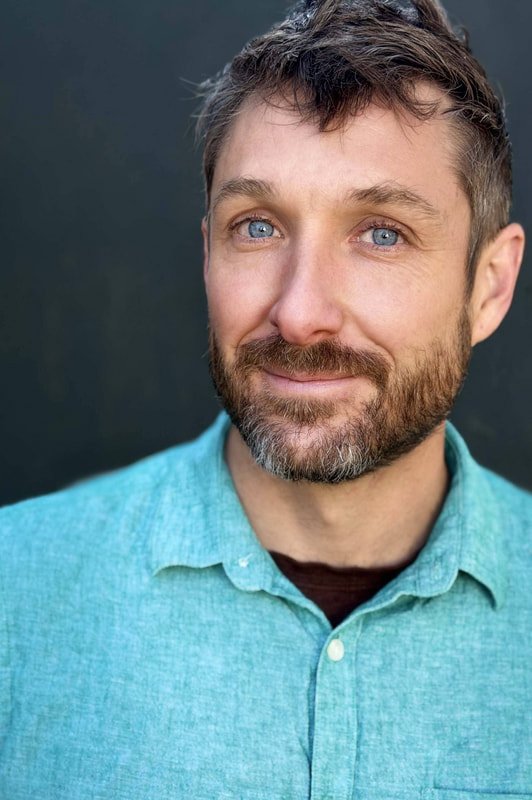
Bruce Kenyon
The heart of my work is inspired by three beliefs:
- that you are inherently whole
- that you are the expert of your own experience
- that your body holds the wisdom necessary to exist in its natural state — adaptive, balanced, and resilient
I hold a Master of Arts in Somatic Counseling Psychology from Naropa University and have been practicing as a Structural Integration therapist in Colorado and California since 2012. That work has taught me what the body inherently knows — and what opens up when structure, sensation, and emotion are met together.
A longstanding curiosity about consciousness, nature, and the transpersonal dimensions of human experience drew me toward Naropa and the lineage of somatic and contemplative psychology it carries. That orientation shapes how I view therapy — less about fixing what's broken, more about being present for what is real, and what is calling.
I navigate my own life largely through sensation — noticing what feels true in the body, and what doesn't. It is the same compass I bring to the work.
I am currently an LPCC in Colorado, working with individuals, couples, and families — in person in Broomfield (with Boulder sessions available on request), walk and talk sessions in Lafayette / Boulder, and available via telehealth.
How I Work
Services, session formats, who this work is for, and how to begin.
Explore →Training & Credentials
Degrees, licensure, certifications, and the theoretical orientation behind this work.
Explore →Request a Free Consult
A few short questions, then I’ll be in touch to set up a free 15-minute call.
Inquire →Common Questions
How much does a session cost?
Sessions are $180 for 50 minutes, with longer sessions available by request. Sliding scale options are available for private pay — reach out and we'll find what works. A free 15-minute consultation is always available before committing to anything.
Do you take insurance?
Yes — I currently accept CCHA Medicaid, Colorado Access Medicaid, Kaiser Permanente, Aetna, Cigna, and United Healthcare. Please verify your benefits before your first session; I'm happy to help clarify coverage questions.
What formats do you offer?
In-person sessions in Broomfield (Boulder available on request), walk & talk sessions outdoors in the Lafayette / Boulder area, and telehealth anywhere in Colorado. I work with individuals, couples, and families.
What is a session actually like?
It looks a lot like talk therapy — we talk. The difference is that the body is invited into the conversation: noticing sensation, breath, posture, and impulse as they arise, and letting them inform where we go. Some clients want a strongly body-based approach; others mostly want to talk and think things through. We find the mix that fits you.
Does this work involve touch?
Only if you want it to. For clients who choose it, my bodywork background can be woven into sessions as somatic touch. Any touch is non-sexual, and you remain fully clothed. Touch is always optional, discussed explicitly before it's ever used, and never a requirement of the work. Consent is ongoing: you can change or withdraw it at any time, without explanation and without affecting your care. Before any touch-based work begins, we review and sign a written consent together.
How do I begin?
Start with a free 15-minute consultation call — a low-pressure chance to share what's bringing you in, ask questions, and sense whether we're a good fit. Answer a few short questions and I’ll reach out to schedule it — or just email or call.
Begin the Conversation
I welcome inquiries from anyone curious about this work. A free 15-minute consultation call is always available — a chance to sense whether we might be a good fit before committing to anything.
Everyone is welcome here — all genders, sexualities, relationship structures, bodies, and backgrounds. The work begins from the same place for each person: that you are whole, and the truest authority on your own experience.
- brucesomatics@gmail.com
- 805 798 5493
- In-person at 80 Garden Center, Broomfield · Boulder sessions available on request · Walk & Talk in Lafayette / Boulder · Telehealth available
Thank you — your request is in.
I read every inquiry personally and will get back to you within two business days to set up a free 15-minute call. If something comes up before then, you can reach me at brucesomatics@gmail.com or 805 798 5493.